Electrical Panel Capacity Assessment
A review of your home's electrical panel to determine whether it can support an EV charger as-is, or whether it needs upgrading before installation.
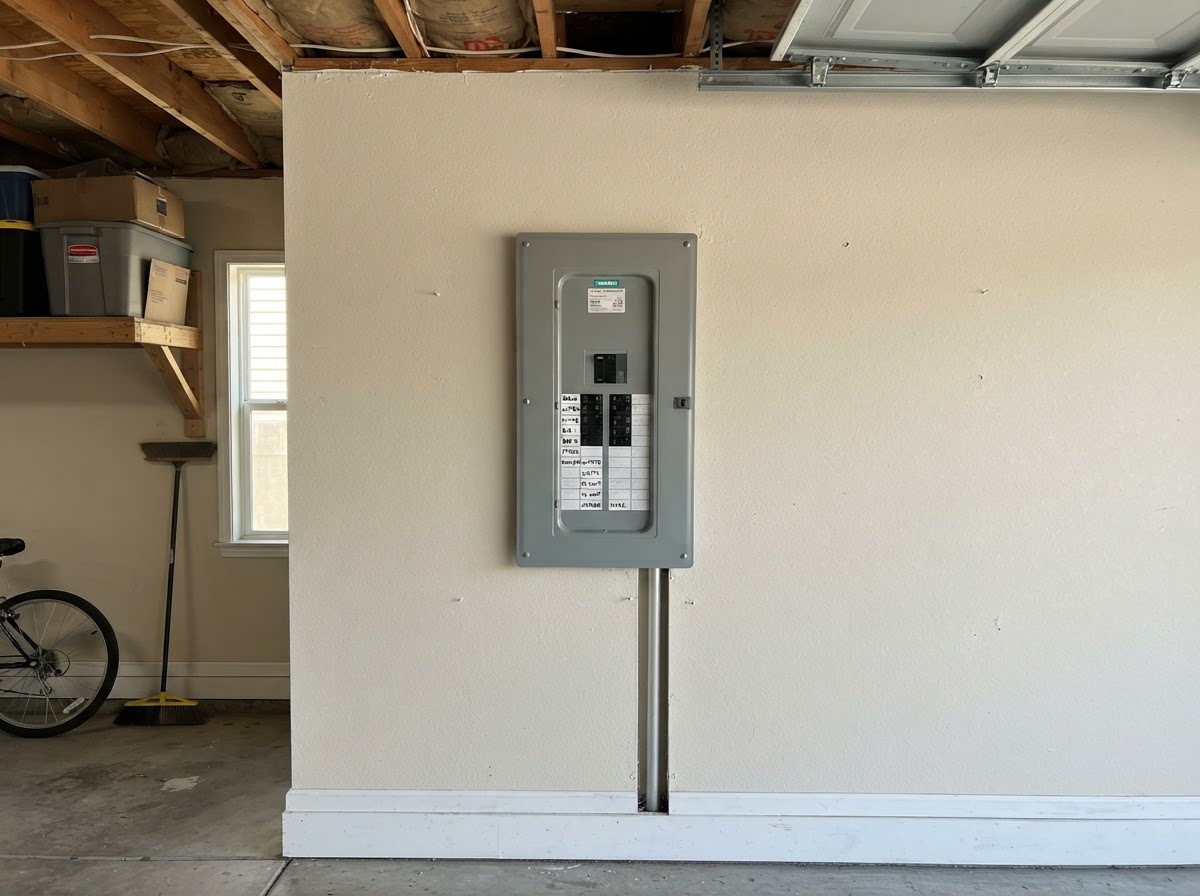
About Electrical Panel Capacity Assessment
Before installing a home EV charger, it helps to know whether your electrical panel can handle the added load. A capacity assessment reviews the panel's size, the existing loads already in use, and the available capacity for a new dedicated circuit.
The assessment identifies whether a charger can be added directly, whether capacity needs to be freed up, or whether the panel may need upgrading. It is the planning step that prevents surprises later in the installation.
What We Review
The details that shape a practical installation for this service.
Panel size
The panel's total amperage rating and how much is already in use.
Existing loads
Major household loads like HVAC, oven, and dryer that share the panel.
Available capacity
How much room is left for a dedicated EV charging circuit.
How This Service Works
A clear sequence from first conversation to a reviewed result.
Review the panel
Identify the panel's rating and the breakers already installed.
Tally the loads
Account for major existing household loads.
Calculate capacity
Determine available capacity for a new dedicated circuit.
Recommend a path
Advise whether the charger can be added or the panel needs upgrading.
Common Questions
What homeowners often ask about this service.
Related Services
Ready to move forward?
Tell us about your vehicle and home. Submit an inquiry to get started.